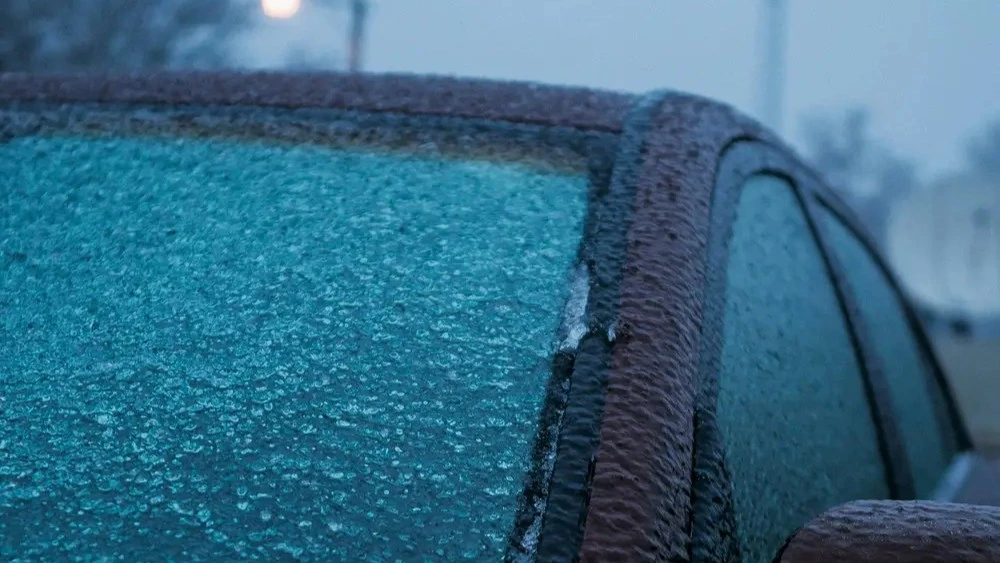
As winter sets in...
And frost and ice become widespread, de-icers turn into essential tools for keeping transport moving. But how do they actually work? The short answer lies in colligative properties—characteristics of a solution that depend on the number of dissolved particles. These properties influence a solution’s freezing point, boiling point, vapour pressure and osmotic pressure.
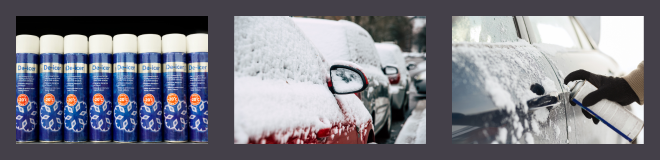
For de-icers, we’re mainly concerned with freezing point depression. Water freezes when its molecules arrange into an orderly crystalline structure. When you add another substance (a solute), this structure is disrupted. As a result, the water must reach a lower temperature before it can freeze.
There’s a deeper thermodynamic explanation as well. Ice and liquid water can only coexist when their chemical potentials—their energetic preference to be in a particular phase—are equal. In pure water, at 0°C, neither phase is favoured, so ice and liquid water remain in equilibrium.
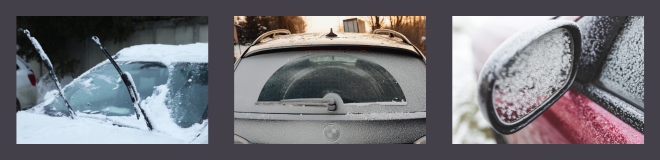
Typical de-icer ingredients such as salts, alcohols and glycols dissolve only in the liquid phase, not in the solid ice. When they dissolve, they lower the chemical potential of the liquid water, while the chemical potential of the ice remains unchanged. To restore equilibrium between the two phases, the system responds by melting ice, even if the temperature is below 0°C. In other words, de-icers don’t add heat—they shift the thermodynamic balance so that melting becomes the favourable process.
Other ingredients...
Such as surfactants can also improve the efficiency of ice removal. Incorporating a small amount of a non-ionic surfactant such as Neodol 91-6 (C9-11 alcohol ethoxylate, 6 EO) helps the de-icer solution spread more evenly across the ice. It also allows for faster penetration through imperfections in the surface of the ice improving product performance. They can also interfere with the hydrogen bonding responsible for binding the ice to the glass.
A typical water-based de-icer formulation for -10 degrees C could resemble the below:
A bit of chemistry goes a long way in keeping winter travel safe and manageable.
| Ingredient | %w/w |
|---|---|
| Water | 80.19 |
| Isopropyl alcohol or ethanol | 15 |
| Propylene glycol | 4.5 |
| Neodol 91-6 | 0.3 |
| Sensirinse blue (dye) | 0.01 |
| Preservative | q.s. |