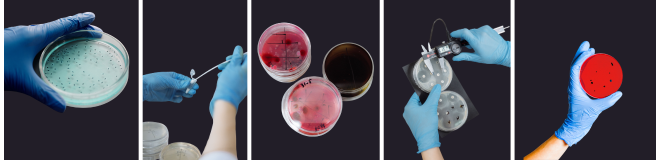
Beyond Bactericidal Testing – Fungicidal & Yeasticidal Requirements
In our previous post, we explored EN 1276 and EN 13697, which are widely used for demonstrating bactericidal efficacy. However, when dealing with fungi and yeasts, different testing standards are required under the Biocidal Products Regulation (BPR) to ensure a product’s effectiveness.
EN 1650 – Fungicidal and Yeasticidal Testing in Suspension
For disinfectants intended to eliminate fungi and yeasts, EN 1650 is the key suspension test. This standard requires a 4-log reduction (≥99.99%) in viable organisms under defined conditions.
Common test organisms include:
- Candida albicans (ATCC 10231) – A yeast often linked to hospital-acquired infections.
- Aspergillus brasiliensis (formerly A. niger, ATCC 16404) – A mould species used as a representative test organism in food production and environmental disinfection.
While EN 1650 assesses fungicidal efficacy in suspension, it does not test performance on hard surfaces. For that, EN 13697 includes fungicidal parameters, ensuring a product’s effectiveness in practical use.
EN 13697 – Hard Surface Testing for Fungal Control
To validate a product’s ability to combat fungi and yeasts on non-porous surfaces, EN 13697 is required. This method is particularly relevant for cleaning products used in food preparation areas, healthcare settings, and industrial applications.
Like EN 1650, it requires a 4-log reduction for fungicidal claims, but in a dry surface environment, making it more relevant for disinfectants applied directly to surfaces.
By combining EN 1650 and EN 13697, manufacturers can demonstrate the full efficacy of a product against fungal contamination, ensuring compliance with BPR regulations.
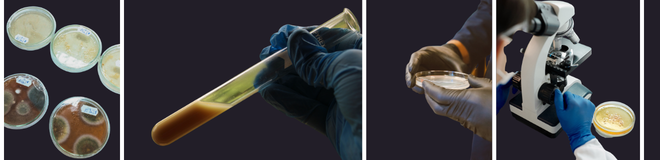
Virucidal & Sporicidal Testing for Biocidal Products
In addition to bactericidal and fungicidal efficacy, many biocidal products require virucidal and sporicidal testing to ensure full regulatory compliance. These tests are especially critical for healthcare, industrial hygiene, and food safety applications, where control of viruses and bacterial spores is essential.
Virucidal Testing – EN 14476 & EN 16777
To claim effectiveness against viruses, a product must pass EN 14476, which evaluates both enveloped and non-enveloped viruses under suspension test conditions.
Key test organisms include:
- Vaccinia virus (ATCC VR-1508) – Used as a benchmark for enveloped viruses, including coronaviruses and influenza.
- Murine Norovirus (MNV, ATCC PTA-5935) – A non-enveloped virus, widely accepted as a surrogate for human norovirus.
- Adenovirus (ATCC VR-846) & Poliovirus (ATCC VR-1000) – Non-enveloped viruses used to demonstrate broad-spectrum virucidal activity.
- For hard surface applications, EN 16777 is required, ensuring that products maintain efficacy beyond suspension-based testing.
Virucidal claims are divided into:
- Limited virucidal activity → Effective against enveloped viruses (tested against Vaccinia virus).
- Full virucidal activity → Effective against both enveloped and non-enveloped viruses (requires additional testing).
Sporicidal Testing – EN 13704
Spores are one of the most resilient microbial forms, requiring specific efficacy testing to support sporicidal claims. EN 13704 is the recognised standard for testing against bacterial spores, typically used in healthcare, industrial cleaning, and food safety applications.
Test organisms:
- Bacillus subtilis (ATCC 6633) or Clostridium difficile (ATCC 43598) – Among the hardest spores to eliminate.
- Products must achieve either a 3-log (≥99.9%) or 4-log (≥99.99%) reduction, depending on the efficacy level required.